


Since gaining independence in 1991, Uzbekistan has undergone a profound transformation – from a closed post-Soviet state to a dynamically developing country confidently entering the world stage, including in the field of tourism.
Over three decades, thanks to comprehensive reforms and strategic planning, the country has not only preserved and revived its rich historical and cultural heritage but also created modern infrastructure that meets international standards. All this has enabled it to become an attractive and competitive destination on the global tourist map.
A key stage in this process was the wave of reforms that began in the mid-2010s. The state recognized the potential of tourism as a source of economic growth and international positioning, and active efforts were launched to simplify the visa regime, improve transport and hotel infrastructure, support the private sector, and strengthen its image abroad.
According to the Statistics Agency, until 2016, the number of foreign tourists visiting Uzbekistan did not exceed one million per year, with the majority coming from neighboring countries. However, by 2019 this figure had risen to 6.7 million, and in 2024 it reached a record 8.2 million. This growth was the result of a targeted state policy aimed at liberalizing the sector, expanding international cooperation, and creating an open tourism climate.
The economic contribution of tourism has become significant. In 2016, tourism service exports were estimated at hundreds of millions of dollars, but by 2023, they had reached $2.14 billion. The forecast for 2024 anticipates growth to 2.5 billion. Tourism is becoming an essential source of foreign currency earnings and job creation – in 2023 alone, about 70,000 people were employed in the sector. Concrete programs and regulations back these figures. For example, in May 2025, President Shavkat Mirziyoyev signed a decree “On measures to enhance the role and significance of tourism in the economy by drastically increasing the flow of tourists and rapidly expanding the volume of tourism services in 2025-2026”, which provides for organizing trips to Uzbekistan for 15.8 million foreign tourists and ensuring tourism service exports worth four billion US dollars. Among the new measures are the introduction of a visa-free regime for citizens of the Gulf countries as well as China, Thailand, and Vietnam. To boost the flow of tourists from abroad, agreements have been reached to purchase 14 Airbus aircraft and lease five more. An additional 378 tour operators will be established. Starting from June, as part of the “Travel Across Uzbekistan!” program, the second Saturday and Sunday of each month have been designated as family and group travel days.
Infrastructure development is progressing at an accelerated pace. In the past year alone, 183 new hotels, 452 family guesthouses, and 239 hostels have been commissioned. The state offers foreign and domestic investors incentives such as tax holidays, subsidies, and affordable loans for the construction of tourism facilities. Alongside this, the number of licensed guides and tour companies is increasing, contributing to improved service quality and higher tourist satisfaction.

One of the key drivers of the industry’s growth has been the consistent simplification of the visa regime, which has turned Uzbekistan into an attractive destination for travelers from around the globe. Today, citizens of more than 80 countries can visit the country without a visa, and for many more states, an electronic visa can be obtained within minutes. This has significantly broadened the geography of tourist flows, attracting both individual travelers and organized groups from Europe, Asia, the Middle East, and the Americas. The practical results of such reforms became evident in April 2025, when, for the first time, the country welcomed over one million foreign tourists in just one month.
Uzbekistan is actively promoting its tourism image by participating in major industry exhibitions in Berlin, London, Tokyo, New York, and Singapore. Cooperation with prominent media outlets such as BBC, CNN, National Geographic, and Discovery has made it possible to showcase the country to a broad audience. For example, in 2024, Malaysian television channels broadcast a 10-episode film produced under the Syahadah program, which introduced viewers to the cities of Tashkent, Samarkand, Bukhara, Fergana, and Khorezm. In addition, one of the leading broadcasters in the Republic of Korea – KBS – aired a special program dedicated to the country’s tourism potential, which generated considerable viewer interest.
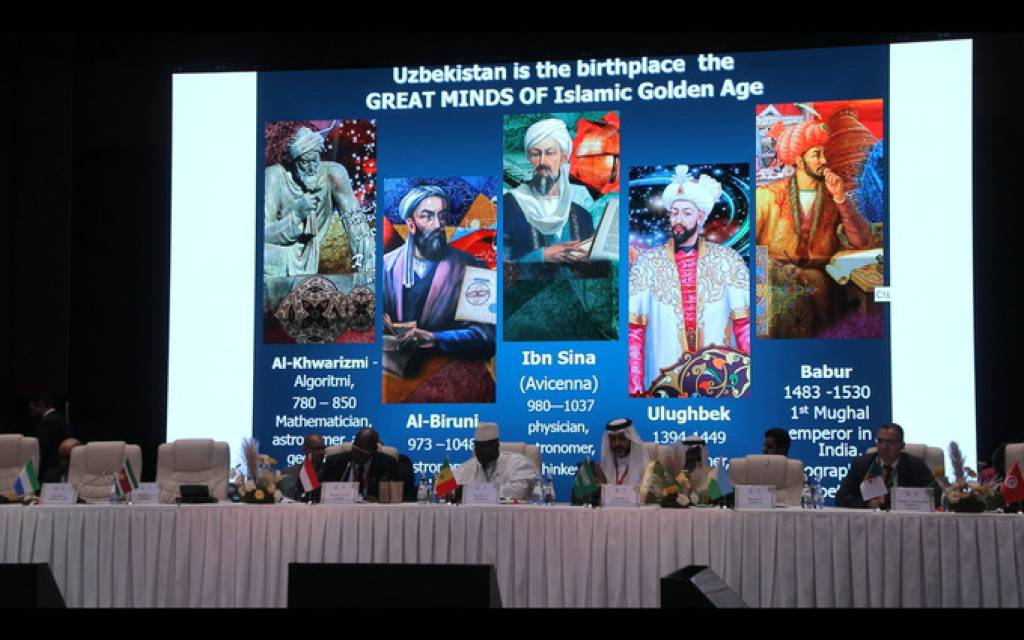
International recognition of the country’s efforts is also becoming increasingly evident. Khiva has been declared the tourism capital of the Islamic world, while Samarkand has been included in the top 10 best cities and exotic places to visit by Lonely Planet. Wanderlust has listed Uzbekistan among the most attractive emerging tourism destinations. In 2025, the UNESCO World Heritage Committee confirmed Shakhrisabz’s status as a cultural heritage site, highly appreciating Uzbekistan’s efforts for its preservation and restoration. Over the next three years, a new nomination will be prepared, focusing on the architecture of the Timurid era and the city’s historical role.
In addition, Uzbekistan plans to introduce new types of tourism. One promising area will be geological tourism, offering travelers the opportunity to explore the Earth’s depths and witness technological processes at gold mining and ore deposits. Planned activities include excursions to mines and preserved geological sites, as well as observing industrial explosions from a safe distance – an experience unparalleled in the region’s tourism practice. Equally ambitious is the concept of scientific tourism, aimed at promoting the achievements of Uzbek science. Tourists will be able to visit institutes of the Academy of Sciences, observatories, planetariums, and laboratories, gaining unique access to research infrastructure and learning about the latest developments in astronomy, biotechnology, and applied sciences. Within the framework of military tourism, it is proposed to organize trips to historically significant sites, memorials, and thematic exhibitions. Special attention is given to the possibility of visiting military training grounds, where foreign guests will be granted controlled access to firearms. This direction is expected to be in demand among enthusiasts of military history and patriotic events. Another unique experience for the region will be government and administrative tourism, providing an opportunity to learn about the structure of Uzbekistan’s political system: tourists will be able to visit government institutions, meeting halls, and facilities previously closed to the public. This practice, common in several developed countries, promotes greater transparency and public interest in governance. The initiative is aimed at diversifying the country’s tourism offerings and attracting a broader range of travelers.
An essential step towards the digitalization of tourism will be the launch, on October 1, 2025, of the interactive Tourist Map portal at Samarkand International Airport. The platform will provide up-to-date information in several languages on tourism infrastructure, attractions, events, and routes.
All of the above demonstrates that independence for Uzbekistan has become not only a political fact but also a platform for profound structural transformation. Tourism is just one example of how the country is leveraging the potential of its history, geography, and culture for sustainable development. The country has succeeded in combining the preservation of its identity with a modern approach to global competition, transforming itself into a place where East meets West. The country prioritizes safety, openness, and hospitality – qualities that are particularly valued against the backdrop of global instability and which enhance its appeal on the world tourism map.